Exploring the Influence and Impact of AJ+ on Social Media

AJ+ is a unique digital news and storytelling project promoting human rights and equality, holding power to account, and amplifying voices of the powerless.
This is what AJ+ states they are in their Instagram bio, and since the beginning of their coverage in 2014, they’ve objectively achieved their goals. They continue to cover a range of topics such as human rights issues regarding minorities, refugees, and discriminated groups in many regions of the world. They tackle topics ranging from social injustices like the lack of education, and food inequalities, to environmental subjects, health topics like the COVID-19 pandemic, as well as situations of political instabilities such as the Arab Spring and the Rohingya crisis. In addition, they dive into cultural, artisanal topics, and technological advancements such as artificial intelligence. Consequently, it is clear that covering global news is their expertise, and they have done so by giving a stage to the powerless, and for the most part – not shying away from critiquing those in power.
AJ+ differentiates itself from Al Jazeera Media Network through its innovative and unique storytelling approach, which managed to appeal to new demographics such as the youth. Because it is social media-centric, it makes it more convenient to view daily news updates without the hassle of scanning lengthy articles on the Al Jazeera website. Moreover, as a video-based channel, it is automatically more approachable and dynamic to the public which helps foster more engagement with their audience. Unlike traditional news, AJ+ allows their audience to curate their consumption based on what interests them which strengthens their audience’s experience with their channel.
An insight into AJ+’s approach to audience development and engagement
Diana Larrea Maccise, the Head of Audience Development leads AJ+ Arabic, français, and Spanish, excluding AJ+ English. Audience development, one of the four core departments at AJ+ is dedicated to finding the best strategies to engage and grow their audience. When a new platform emerges, Maccise and her team examine and observe these platforms and its existing audience to know why these people are on this new app; sometimes these platforms might not work for AJ+. It is also worth mentioning that when AJ+ produces a piece of content, it isn’t posted agnostically over all platforms because they know each platform has a different audience.
We try to understand a new platform that we want to go to… we are open to experimenting, but we experiment within a framework of foundational knowledge about the platform and the audience that lives and consumes content on that platform.
Diana Larrea Maccise
What makes AJ+ appeal so much to their audience?
At the inception of AJ+, there wasn’t really any news organization that targeted social media in an engaging way as heavily as AJ+. It was mostly professionally done, without taking into account the audience watching, so AJ+ emerged as trailblazers in that field in both the Western and Arab world. Iman Abu Rub, an analyst in the audience development team explains that they spark their audience’s interest through creativity and entertainment. And through data analysis, they study their preferences based on the overall interaction and engagement rate they accumulate on each post to know what they gravitate towards.
Good journalism is number one, but that’s not enough, you need something more engaging, something easier to digest, and because we are also targeting the younger audience , how do we make them care about these kind of topics?
Iman Abu Rub
In that way, they cover world news in ways that appeal to the youth, by studying trends and what their audience care about. They also analyze their competitor’s performance, and how the same stories they cover appeal to their audience in different ways. Recognizing TikTok’s widespread usage, they target individuals aged 18-24 through straightforward and comprehensible content knowing that their audience is looking for concise videos on a fast-paced app like TikTok. Additionally, they keep their audience engaged on each platform where they have a presence by using user feedback, such as liking comments on posts and even responding to direct messages. Abu Rub emphasizes, “We are always making sure that AJ+ is a real organization with real people and that we are here for the audience.”
AJ+’s initiatives in amplifying underrepresented and marginalized voices
Highlighting marginalized voices is a very big part of AJ+’s work. Iman Abu Rub explains that all their teams deliberately choose to cover stories of underrepresented people. Since 2015, they’ve created a lot of micro impact when it comes to covering stories that has lead their audience to initiate fundraisers for these individuals or groups. For instance, they covered the story of Rowaid, a child who was expelled from school due to his disability. After his story was published, two men changed his life by covering his medical expenses. This act also prompted schools to take him in, a development documented in AJ+’s subsequent videos.
However, she notes that as journalists, there’s a line AJ+ cannot cross, thus they refrain from creating fundraisers for the individuals they cover. Instead, they facilitate contact between them and their audience who wish to offer help. So essentially, AJ+ covers these stories without any biases, and from the perspective of the individuals involved so that they can amplify their own voices.
AJ+ values research, fact-checking, and following journalistic principles; they make sure that the news they cover has depth while maintaining its dynamic and engaging intent. Thus, the brand identity they’ve built over the years sets them apart in a digital world filled with an overwhelming amount of information.
A Glimpse Behind the Walls
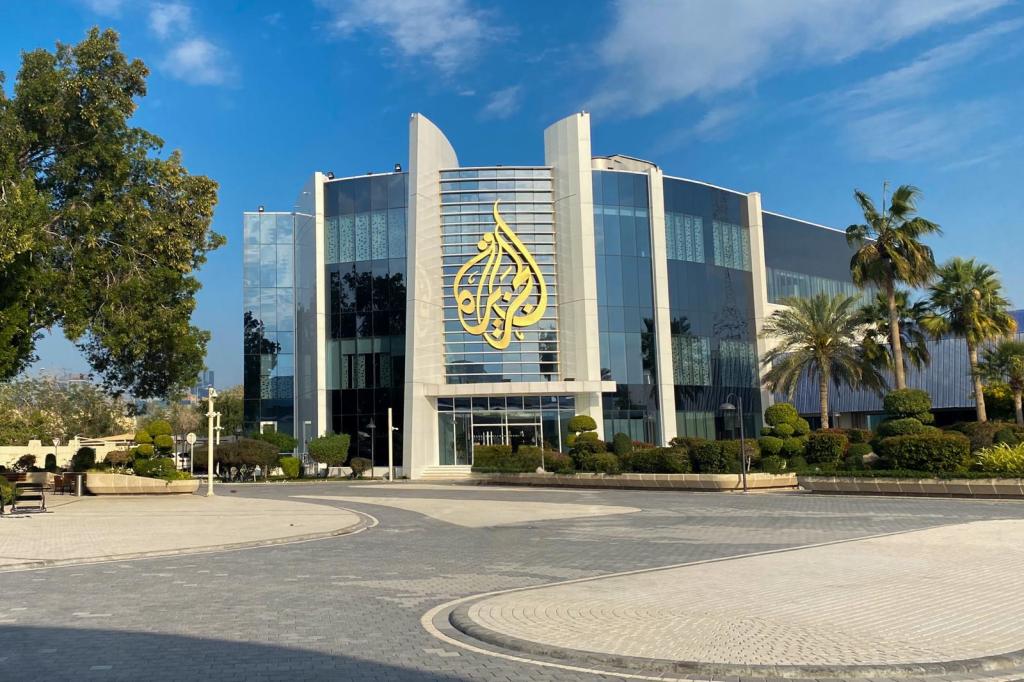
For each channel – Al Jazeera English, Al Jazeera Arabic, and Al Jazeera Mubasher – there is a building dedicated to delivering the news we see. In this snapshot, the home of Al Jazeera Arabic remains immovable, enveloping the bustling activity of what occurs behind the scenes. Inside, each person can be seen focused on their respective task, from producers to camera directors, to TV presenters, and beyond.
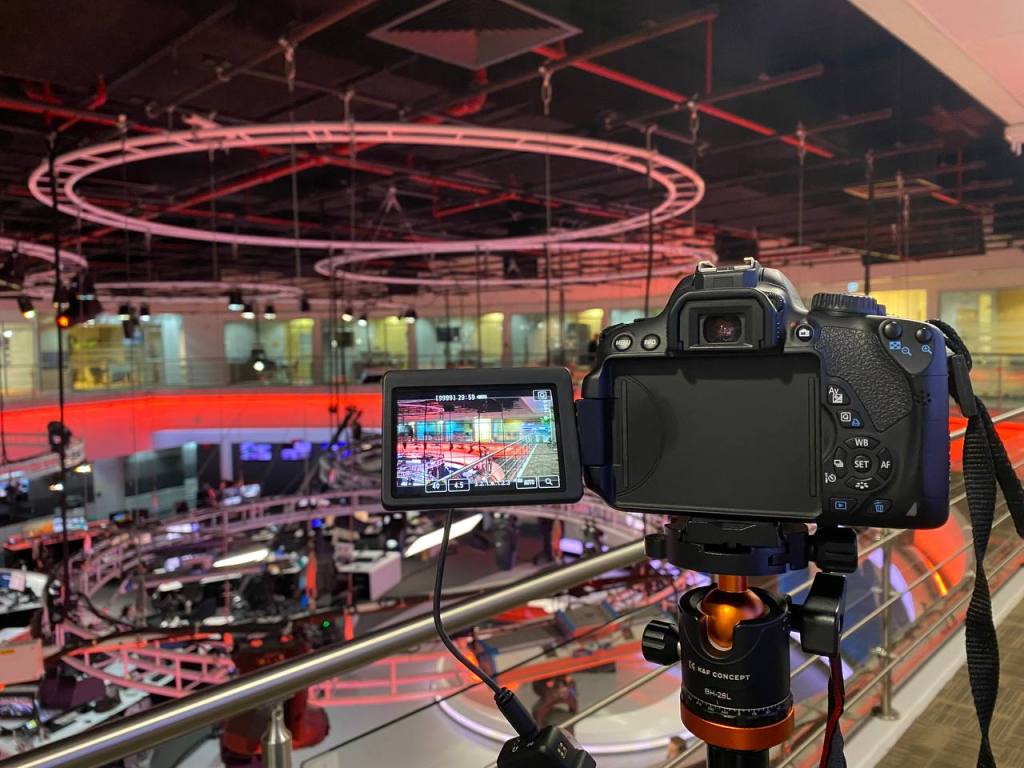
Through the camera, this photo captures a moment from the epicenter of Al Jazeera English, the newsroom. Down below lies a spacious area where journalists, editors, and producers are working tirelessly to gather the latest global news, ready to be delivered to the TV presenter situated close by. Surrounding the presenter are various cameras capturing multiple shots of the scene.
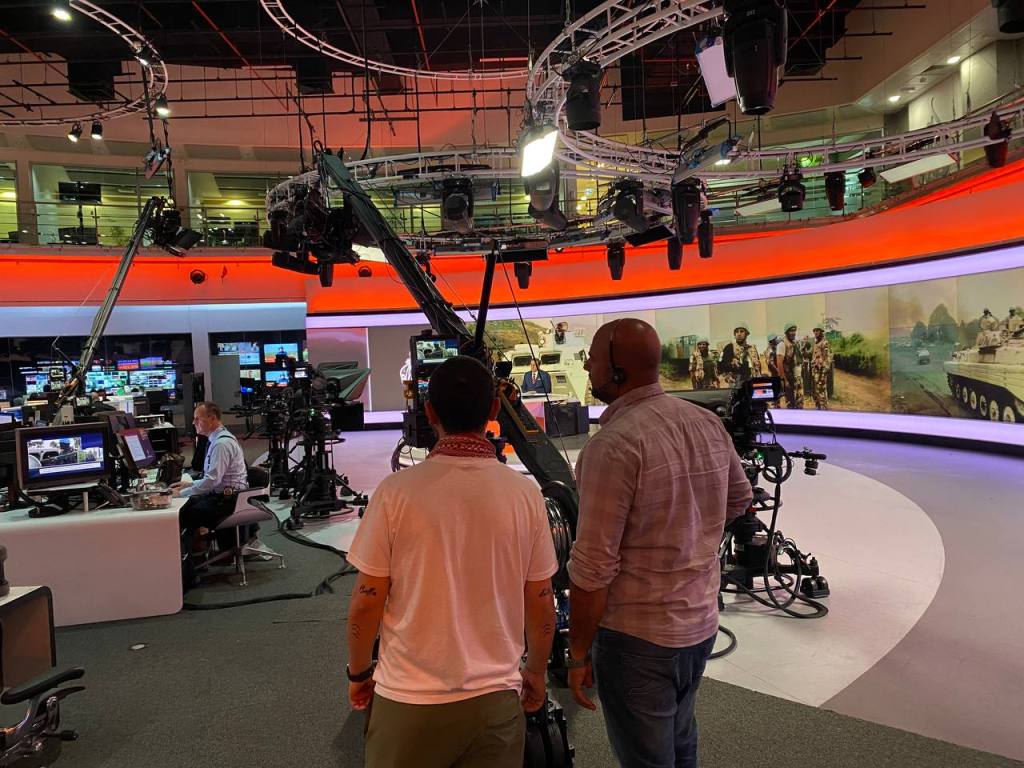
Facing away from the camera are two camera directors meticulously monitoring one of the cameras mounted on a jib. This allows them to capture wide shots of the TV presenter and their surroundings. These shots will add depth and dynamism to the final broadcasting visuals. Additionally, the jib ensures smooth camera movements which enhances the overall professionalism of the broadcast.
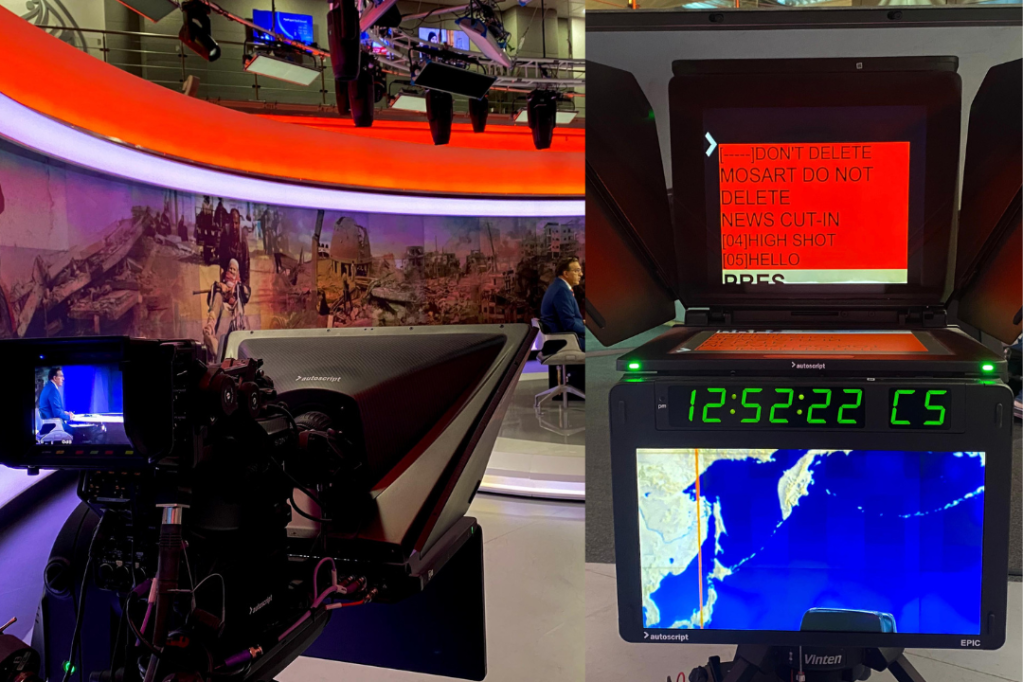
This shot gives another perspective from the opposite side of the room. In focus is the TV presenter, who is seen through the Autoscript machine which can also be viewed by him so that he knows what is currently broadcasting on TV. The Autoscript machine, an AI tool, recognizes speech to adjust the scrolling speed of the script according to the presenter’s delivering pace. Thus, this tool ensures that the presenter’s delivery is natural and effortless for the broadcast.
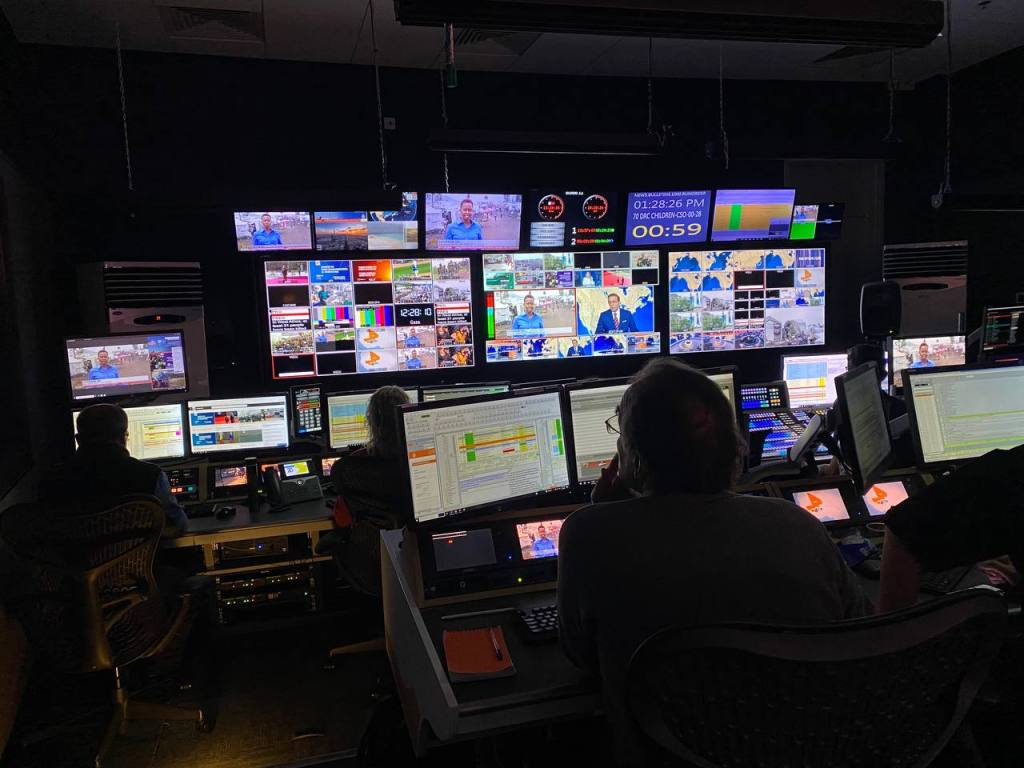
Moving inside the newsrooms, multiple galleries can be found. In this image, producers, vision mixers, light, and sound technicians are situated in a gallery. From this perspective we can observe them working diligently to produce the final image we see on TV. Although each individual is responsible for different tasks, they must be collaborative and dynamic as all their work is interdependent.
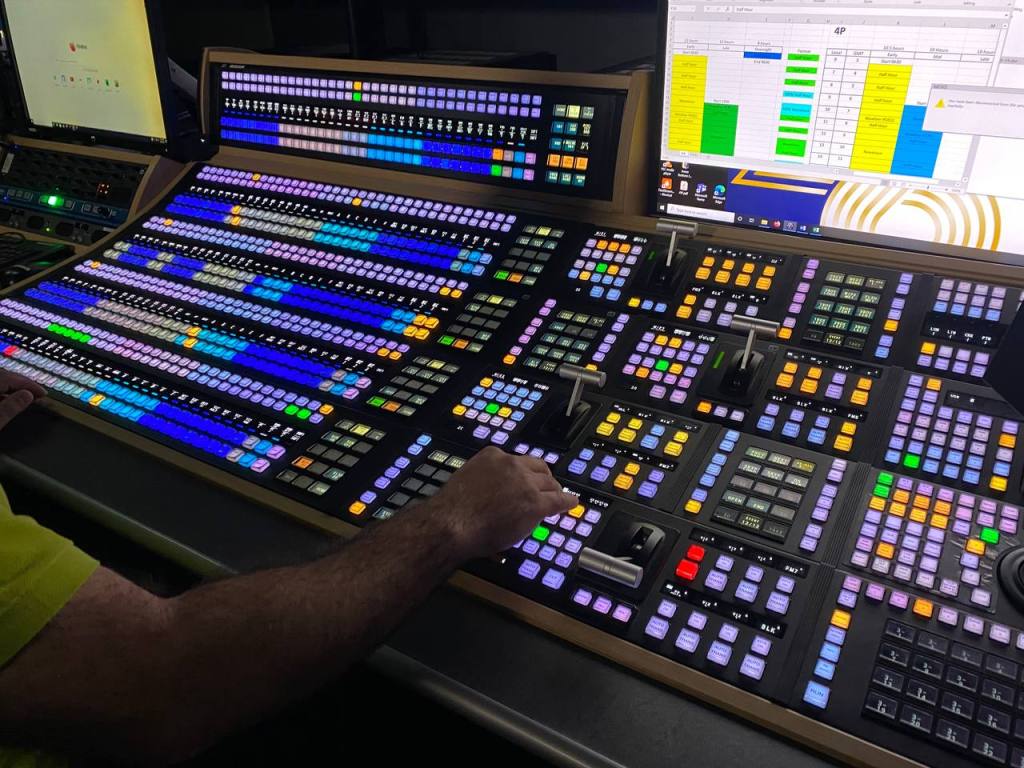
Zooming in, this snapshot shows an individual operating on a vision mixer. A vision mixer must be highly attentive to their work as they are directly responsible for each shot in a broadcast. They should be able to make split second decisions when deciding the next video shot to insert, while also trying to maintain the cohesiveness and the overall storytelling of the broadcast or program. Whilst every role in a gallery is crucial, the vision mixer is the one who truly brings the narrative to life.
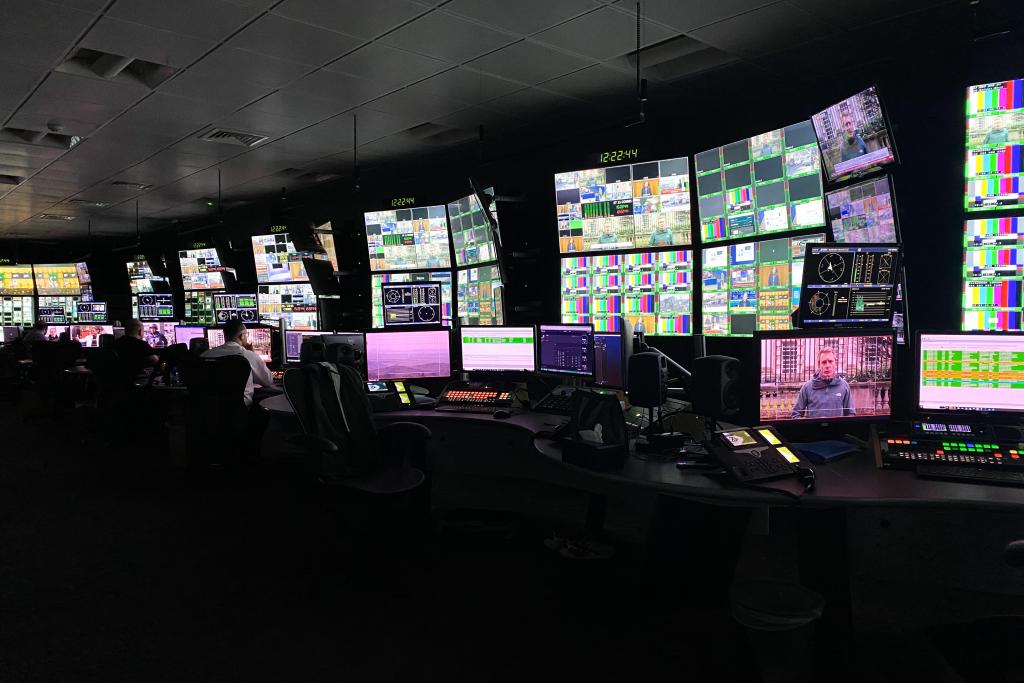
Stepping into the heart of broadcasting, this image presents a glimpse into the Master Control Room (MCR). Those working in an MCR handle the technical aspects of broadcasting by receiving signals from outside sources, as well as managing outgoing signals from Al Jazeera. The countless monitors shown in the image display content that must monitored to ensure that it is reliable and up to standard with Al Jazeera’s quality requirements.
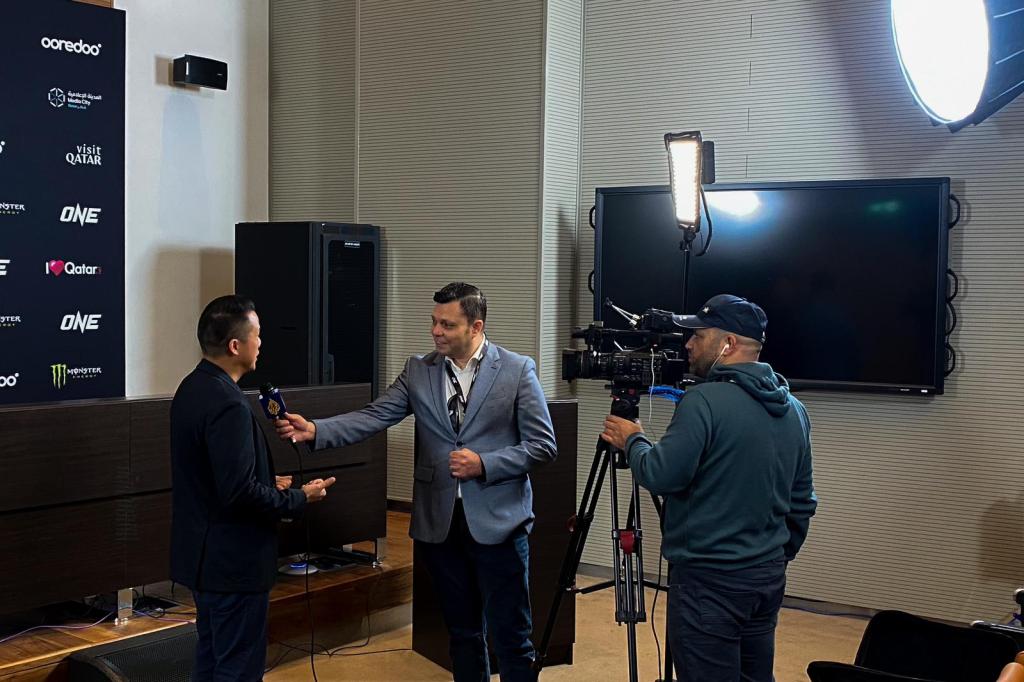
The last image shows a journalist and camera director collaborating on the field. The journalist took the lead by informing the camera director about the shots and scenes he wants for the final visual of the program. In this instance, they can be seen interviewing the Co-founder of the Martial Arts championship that they were covering. To effectively achieve the program’s vision, the journalist had a strategic plan that led to smooth coverage by knowing what questions to ask the interviewee, as well as clearly instructing the experienced camera director about his idea.

